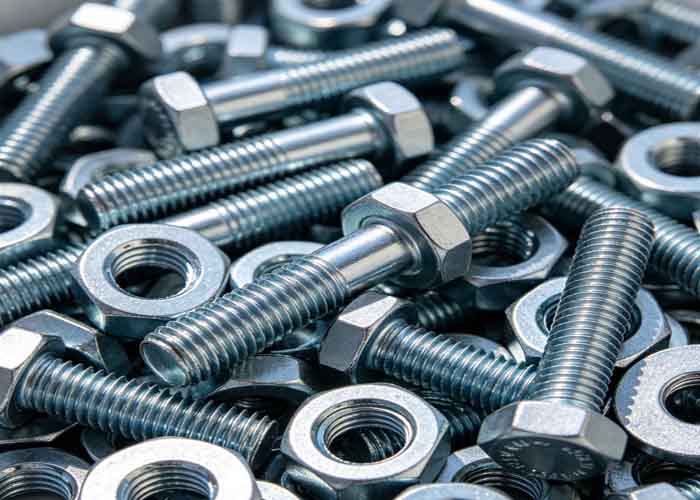
Emily---metal bolt manufacturer of nickel alloy fasteners: bolts, nuts, screws,washers, and studs.
Emily focus on producing an extensive range of fasteners in many kinds alloys including: Hastelloy C276, Hastelloy C22, Inconel 600, Inconel 625, Inconel 718, Monel 400, Monel K500, Duplex 2205, Super Duplex 2507, AL-6XN, 25-6Mo, A-286, SS 310S, and SS 321, Titanium Grade 2, Titanium Grade 5, Titanium Grade 7, etc.
Hex Bolts
אגוזי משושה
מנקי
ברגים
Socket Set Screws
Anchors
Emily---alloy bolt manufacturer of of nickel alloy fasteners: bolts, nuts, screws,washers, and studs.
Emily maintains a multi-million inventory of Nickel Alloy Fasteners as well as an unparalleled inventory of high-quality raw materials. Our multi-million inventory at our manufacturing facility uniquely enables our team to adapt quickly to orders and custom engineered products to our customers’ requirements.
Industrial bolts are a form of high-strength hardware designed to fasten two or more workpieces together. They feature threads—helical ridges that wrap around the shaft, which enable them to be secured with nuts. In many assemblies, they are selected for strength, repeatability, and the ability to service a joint without cutting or welding the connected parts.
It’s important to note that screws, another type of threaded fastener, share a similar construction with industrial bolts. This similarity often causes confusion, leading many people to use the terms interchangeably. Understanding that distinction helps buyers compare fastening methods, load paths, and maintenance needs more accurately.
Buyers researching industrial bolts often compare bolt grades, thread pitch, corrosion resistance, and material strength before choosing a fastener. In practice, the right bolt supports safe clamp load, dependable joint retention, easier maintenance, and compatibility with matching nuts, washers, and installation tools.
Emily---bolt manufacturer of stainless steel fasteners: bolts, nuts, screws,washers, and studs.
What are industrial bolts used for?
Industrial bolts are used to fasten two or more components with a secure, serviceable joint. They are common in construction equipment, production machinery, structural steel, transportation systems, and plant maintenance because bolted connections combine strength, repeatability, and easier replacement when assemblies need inspection or repair.
How are bolts different from screws?
While both are threaded fasteners, bolts are generally paired with a nut and used through an unthreaded or clearance hole, while screws more often cut into or engage the material itself. In industrial applications, that difference affects joint design, clamp load, serviceability, and how the fastener performs under vibration or repeated maintenance.
What materials are commonly used to make bolts?
Common bolt materials include carbon steel, alloy steel, stainless steel, nickel alloy, titanium. Material choice depends on load, corrosion resistance, temperature, weight, conductivity, and the environment in which the fastener will operate.
What are the main parts of a bolt?
The main parts of a bolt are the head, shank, threads, and chamfered end. Together these features allow tool engagement, alignment through the joint, controlled tightening, and smoother nut starting during assembly.
Emily---bolt manufacturer of titanium alloy fasteners: bolts, nuts, screws,washers, and studs.
What are the most common types of bolts?
Common bolt types include hex bolts, anchor bolts, carriage bolts, U-bolts, lag bolts, eye bolts, flange bolts, and machine bolts. Each is designed around a particular installation method, substrate, load path, or industry use case.
How are industrial bolts manufactured?
Industrial bolts are commonly manufactured from wire rod through cleaning, coating, cold heading or cold forming, head formation, and thread rolling. This process supports consistent dimensions, strong grain flow, efficient production, and reliable thread quality for high-volume industrial hardware.
Why are bolt standards important in manufacturing?
Standards such as ASTM and ISO help define dimensions, thread form, mechanical properties, tolerances, and material expectations. Standardization improves interchangeability, supports safer assembly practices, and helps buyers match bolts, nuts, washers, and tools across suppliers and projects.
How can you prevent bolts from rusting or corroding?
Corrosion can be reduced by choosing the right material, finish, and storage conditions. Stainless steel, protective coatings, dry storage, routine inspection, and timely cleaning all help extend service life and protect clamp load in outdoor, washdown, or chemically exposed environments.
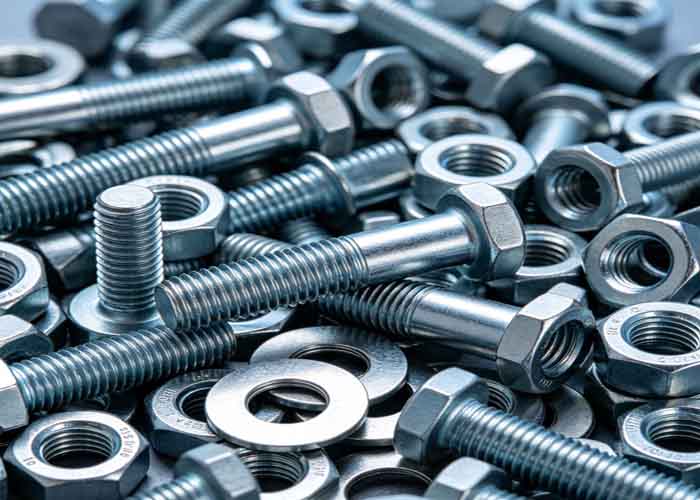
Types of Bolts
Bolts are available in a wide variety of sizes, shapes, grades, and materials, each suited for different purposes. Selecting among these options usually depends on load, substrate, installation access, corrosion exposure, and service requirements.
When people search for the best bolt for a project, they are usually comparing application, substrate, load, environment, and installation method. A bolt that performs well in wood framing may not suit concrete anchoring, vibration-prone equipment, chemical exposure, or outdoor structural service, so matching the fastener type to the job is part of choosing wisely.
Oven Head Bolt
Also known as a stove head bolt, oval binding head bolt, or truss head bolt, this design is intended for use with large diameter clearance holes in sheet metal. They are often chosen where a broad bearing surface and a neat finished appearance are useful.
Square Head Bolt
Named for its square-shaped head, square head bolts were once the industry standard. Today, they are primarily used for aesthetic purposes, especially for creating a rustic look on buildings. Their head shape can also provide better wrench engagement in some field conditions.
Anchor Bolt
Commonly used in building and construction, anchor bolts are typically embedded in concrete. They are widely used for anchoring columns and supports to foundations or securing traffic signal poles. They are a common choice when permanent equipment or structural members must be secured to masonry or concrete.
U-Bolt
Shaped like the letter "U", these bent bolts feature threads at both ends. They can be round, square, or semi-round, and are often used to attach suspended items to a surface. U-bolts are widely used in construction and the automotive industry. They are frequently used for pipe support, suspension, and clamping round members.
Eye Bolt
With threads on one end and a circular eye on the other, eye bolts are used to guide a cable, rope, or chain for lifting purposes. They are commonly found in aircraft construction. Selection should account for load direction, lifting practice, and the rating of the eye itself.
J Bolt
Named for their "J" shape, these bolts are half of a U-bolt. They are typically used as cast-in-place anchor bolts and are often made from steel or titanium. Their shape helps anchor the fastener into poured concrete for support and hold-down applications.
Stud Bolt
Stud bolts are round metal bars that are threaded at either end or throughout the entire length. They are often used for fastening or anchoring. They are often used in flanged connections, maintenance work, and assemblies requiring nuts on both ends.
Expansion Bolt
Comprising a taper-headed bolt, lead sleeve, metal cone, and a nut, expansion bolts are used to secure seating in theatres, auditoriums, stadiums, and classrooms. As the bolt is driven into a surface, its attachments expand, securing the bolt in place. This makes them useful where a mechanical anchor is needed in an existing base material.
Lag Bolt
Heavy wood screws with a hexagonal or square head, lag bolts are typically driven into wooden beams or posts using a wrench. They are common in wood construction and other heavy-duty fastening jobs involving timber.
בורג משושה
Characterized by a six-sided head, hex bolts are commonly used fasteners. They feature a threaded shank and a washer, with varieties such as heavy hex bolts and hex cap screws. A hex nut is used to fasten these bolts. They remain a go-to choice for general industrial fastening because they are easy to source and easy to tighten with standard tools.
Shoulder Bolt
Used as pivot mounting shafts, shoulder bolts are not threaded all the way to the head. The threading stops short, leaving a smooth shaft that is wider than the threaded part. These bolts are generally made from stainless steel and can be square or round. The smooth shoulder supports rotation, spacing, or guided motion in mechanical assemblies.
Carriage Bolt
With a rounded head and a square collar, carriage bolts are designed to prevent twisting during installation. They are primarily used for joining wood. They are often used in wood construction, decking, and furniture-style assemblies.
Elevator Bolt
These bolts feature a flat head with a square collar that keeps the bolt in place as it is tightened. They are most commonly used in conveyor systems. Their low-profile head helps reduce snagging in systems that move material.
Flange Bolt
Flange bolts have an integral washer that helps distribute bearing weight and prevents material distortion during installation. This built-in bearing surface can reduce the need for a separate washer in some assemblies.
Metric Bolt
Metric bolts use the metric system for their measurements and are widely used internationally. They are often specified for international equipment, imported machinery, and projects requiring metric compatibility.
Machine Bolt
Industrial bolts with square or hexagonal heads, machine bolts usually range in diameter from ¼ inch to 3 inches. They are selected for assemblies where a nut-secured connection is preferred over a screw-driven thread.
Thru Bolt
Thru bolts pass completely through a material layer and are secured with a nut on the opposite side. Known for their strength and reliability, they are ideal for heavy-duty applications and can handle large loads. Thru bolts are commonly used in rolling shutters, security grills, sun awnings, and garage doors. Their full-through clamping arrangement is valued when strong retention and easy inspection are priorities.

Need it Now?
We pride ourselves on providing the fastest fastener deliveries in the industry. Most deliveries arrive to site within 1 week from placement of order.